Supplier sign in
Home
STAY INFORMED
Subscribe to our monthly newsletter.
Your email address will never be disclosed to any third party.
Read our privacy notice.


Product news
15.01.2026  |  31x
Share this item

Hosokawa Alpine presents solution for textile recycling

A new solution for the sustainable recycling of textile waste. Hosokawa Alpine is setting standards in textile shredding, making it possible to reuse textile scraps efficiently and sustainably.

Textile recycling and the new EU directive

In response to the new EU directive on the separate collection of used textiles, Hosokawa Alpine provides efficient processing that recovers valuable fibers for the circular economy.

Efficient process chain for the circular economy

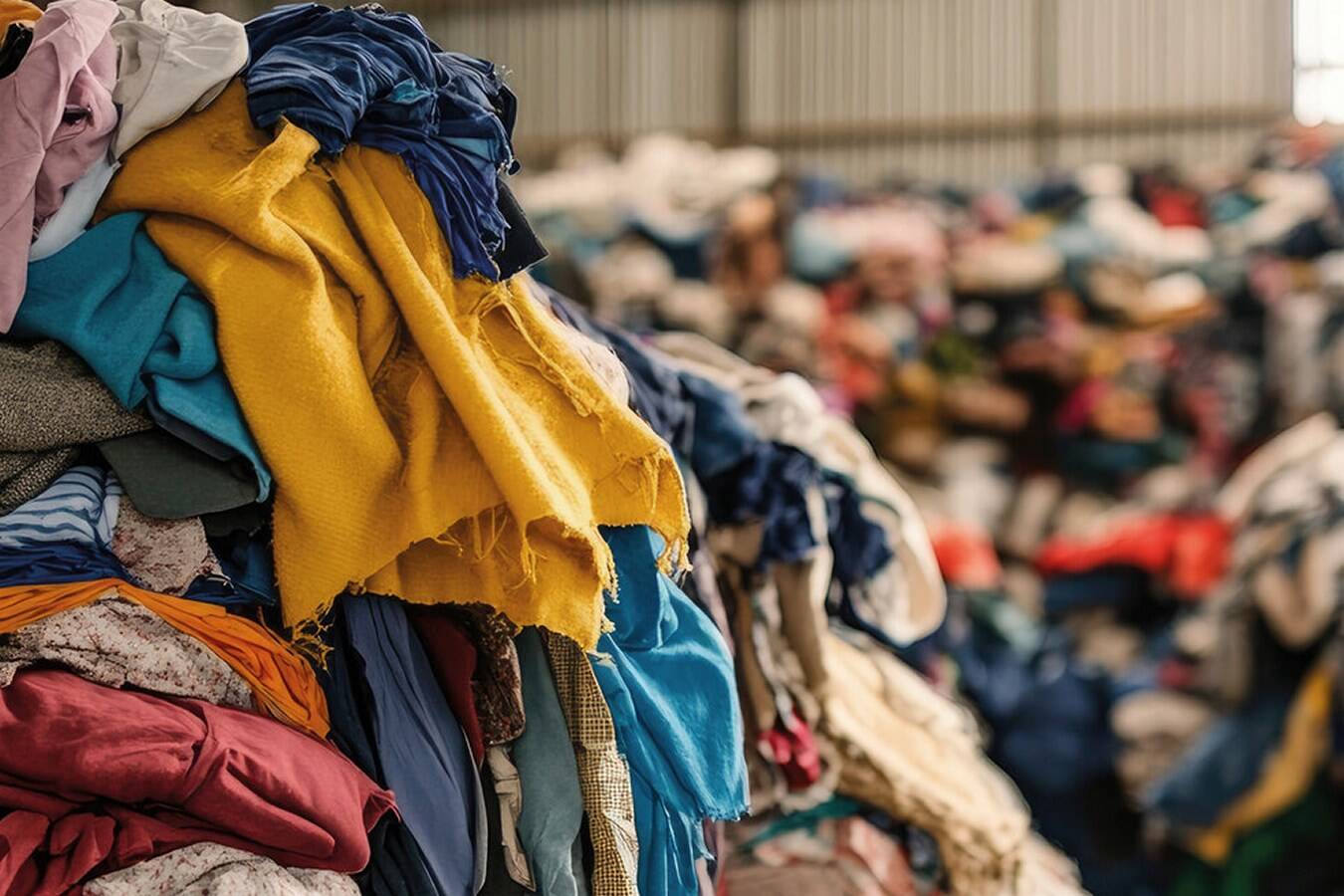
Since January 1, 2025, an EU directive has mandated the separate collection of used textiles. To process these volumes economically, the Augsburg specialist for mechanical process engineering developed a specialized system. The process starts with shredding textile bales, followed by pneumatic transport for defibering. A downstream classifier separates the material into clean fibers and residue.

Optimization through proven crushing technology

  • Performance increase of up to 50% due to special rotor design
  • Robust construction with a solid, durable cast housing
  • High throughput of up to 400 kg of textiles per hour
  • Integrated water cooling and pneumatic suction as options

The Rotoplex granulator as a central element

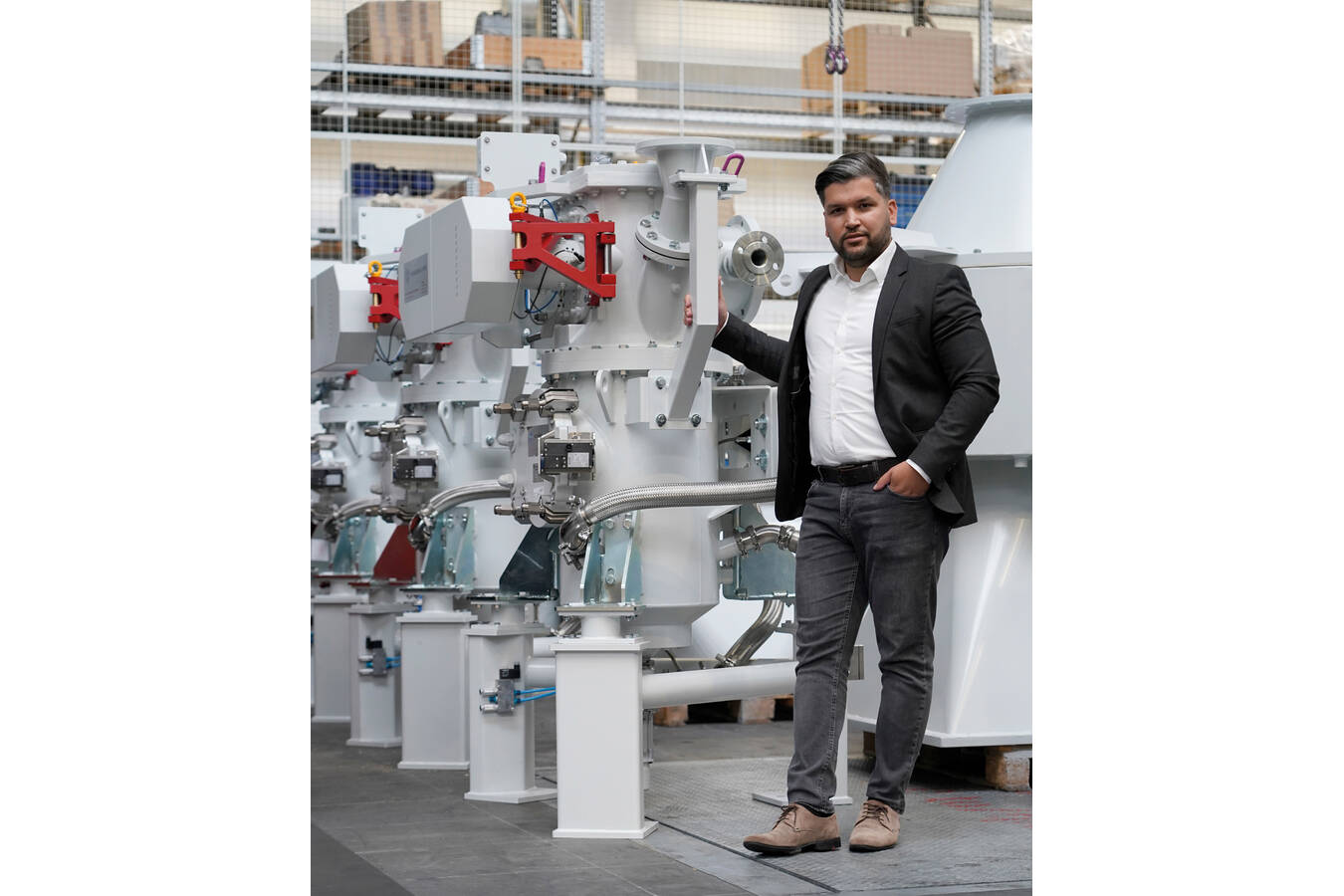
The Rotoplex granulator is the heart of the plant, optimized for modern recycling for its 60th anniversary. Through continuous development, the system now achieves top values in material separation. According to Michael Meyerle, Sales Manager Recycling Technologies, the solution helps close production loops while ensuring high safety standards such as optional ATEX compliance.


Company information

More items

Hosokawa Alpine: Process solutions for magnets made from rare earths The Augsburg-based machine and plant manufacturer Hosokawa Alpine is focusing on processing rare earths for permanent magnets in various applications.
Hosokawa Alpine: Process solutions for magnets made from rare earths
The Augsburg-based machine and plant manufacturer Hosokawa Alpine is focusing on processing rare earths for permanent magnets in various applications. Hosokawa Alpine, a global leader in process technology, is expanding its innovative solutions in the processing of rare earths. The materials are then used in high-performance electric motors and other cutting-edge applications. The company is therefore making an important contribution to advancing issues such as electromobility, aviation and wind turbines. High-quality magnets made from rare earths for innovative applications Rare earth magnets, especially neodymium iron boron (NdFeB) and samarium cobalt (SmCo) alloys, are essential components for electric motors used in electric vehicles, household appliances and industrial machinery. They also play an important role in electronics, medical devices (MRI) and renewable energy technologies. However, new challenges will have to be overcome if the increasingly important rare earths are to be processed with precision. Hurdles in processing rare earths ’At Hosokawa Alpine, we are working hard to expand our AFG-R
12.12.2024  |  1538x  |  Product news  | 
Videos from Hosokawa Alpine with insights on battery technology Let’s talk: New video series from Hosokawa Alpine providing insights into the future of battery technology
Videos from Hosokawa Alpine with insights on battery technology
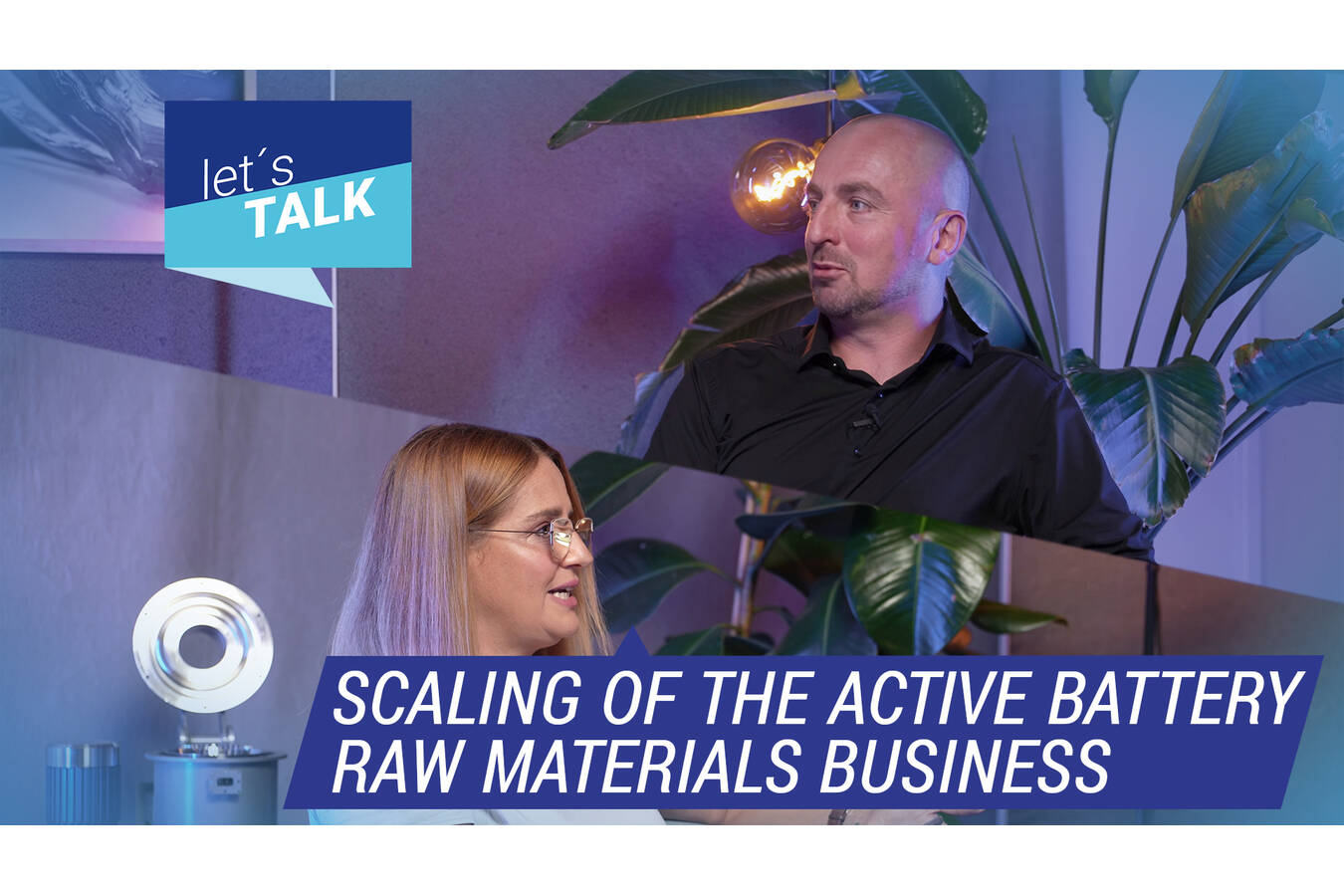
Let’s talk: New video series from Hosokawa Alpine providing insights into the future of battery technology Talking together and peering into the future – that’s what the new ’Let’s talk’ video series from Hosokawa Alpine is all about. The Augsburg-based machine and plant manufacturer, which specialises in mechanical process engineering and blown film extrusion, is hosting short panel discussions with industry and research experts on current and future-oriented topics relevant to the industry. Talk show on battery technology How can manufacturers scale their battery production? Are there alternatives to lithium-ion batteries? And how can battery manufacturers recycle production waste during the manufacturing process? In the first series of three episodes, the experts address these questions on battery technology. Just like on an actual TV talk show, they sit together and casually chat about the topics in these 15-minute videos. They examine the issues from a variety of angles, but viewers themselves can draw their own conclusions from the talks. ”With ’Let’s
18.11.2024  |  1385x  |  Product news  |   | 
Multiprocessing systems: Flexibility and efficiency available quickly The modern production environment requires flexibility, efficiency and speed
Multiprocessing systems: Flexibility and efficiency available quickly
The modern production environment requires flexibility, efficiency and speed When manufacturing products with variable grinding properties, multiprocessing systems are crucial. This is because they offer a time-saving solution for complex production requirements. Thanks to the new Speedline series with a shortened delivery time of just 4 months, it is possible to react quickly to customer requirements and expand production capacities. How does a multiprocessing system work? The functionality of the MPA is based on a modular concept. A basic module contains all the necessary components of a grinding and classifying system, while additional modules can be added as required. This enables time-efficient conversion between different processes. The special design also reduces cleaning and maintenance times. Where are multi-processing systems used? The multi-process systems are versatile and are used in a wide range of applications. Particularly, they are used for the flexible production of smaller product quantities, especially in product development.
16.04.2024  |  1327x  |  Product news  | 
Direct recycling of production waste of Lithium-ion batteries The machine and plant manufacturer Hosokawa Alpine has developed a process that can be used to recycle material scrap created in the production of lithium-ion batteries directly by the battery manufacturer.
Direct recycling of production waste of Lithium-ion batteries
The machine and plant manufacturer Hosokawa Alpine has developed a process that can be used to recycle material scrap created in the production of lithium-ion batteries directly by the battery manufacturer. From consumer electronics to electromobility: The demand for lithium-ion batteries is steadily increasing. But increased battery production also leads to a greater number of rejects during the manufacturing process. This arises, for example, when sorting out defects such as pinholes, inclusions and other coating faults, due to edge trimming or rejects during the finishing process. In total, about 10% (or considerably more depending on the process) of the coated cathode or anode films end up as rejects and have to be recycled. In particular, the valuable active materials, i.e. the NMC or LFP of the cathode films or the graphite-silicon mixtures of the anode films, should be processed and directly recycled free of impurities. Direct recycling ensures efficient production In order to be able to recycle cathode and anode film scrap during production, Hosokawa Alpine has developed a range of solutions. ”Direct recycling means that rejects can be recycled at the production
12.10.2023  |  1803x  |  Product news  | 
PORTALS
Recycling-Portal Schuettgut-Portal BulkSolids-Portal
SIGN UP FOR OUR NEWSLETTER
Newsletter archive
Service and contact
ContactDisclaimerPrivacyAdvertising
FOLLOW US
Linked