Why ship air?
Extremely lightweight products with high air retention pose specific challenges throughout the entire process chain. Especially when handling fibers challenges begin long before the actual filling step, because fibers are not a standard bulk material.
Not only the filling process
In addition to the filling process itself, material handling upstream of the filling system plays a critical role in ensuring overall process stability. Irregular feeding, inconsistent distribution within the pre-hopper, and entrained air directly impact the efficiency and quality of downstream packaging.
Challenges in fiber processing
- inconsistent feeding of the pre-hopper
- bridging and unstable material flow
- high air content within the product
- fluctuating filling weights
- unstable bag filling behavior
- bag inflation during the filling process
- fiber fly and release of fine particles
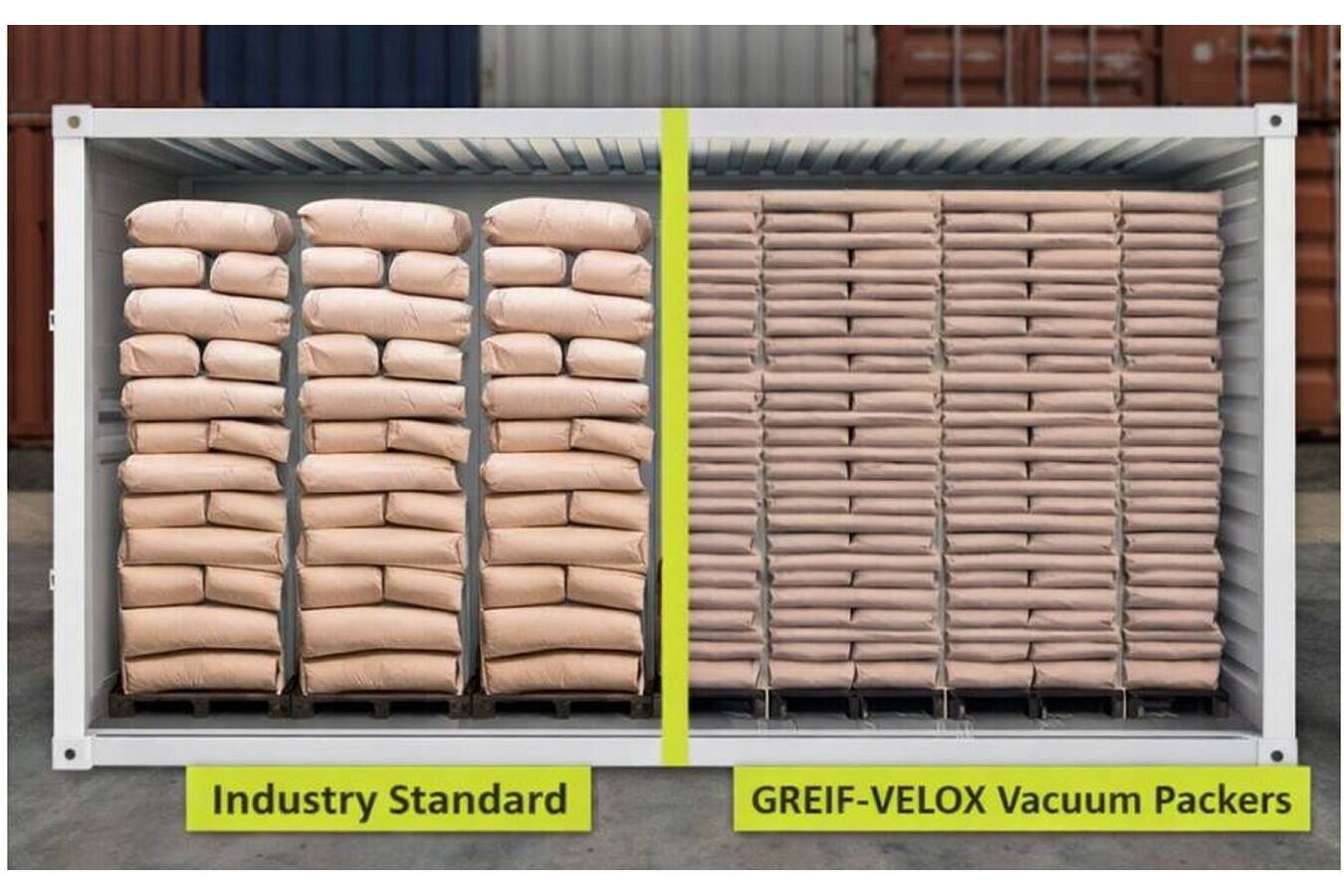
- reduced payload per bag
- limited shape stability during transport
- inefficient container utilization
Full-line integration + vacuum technology
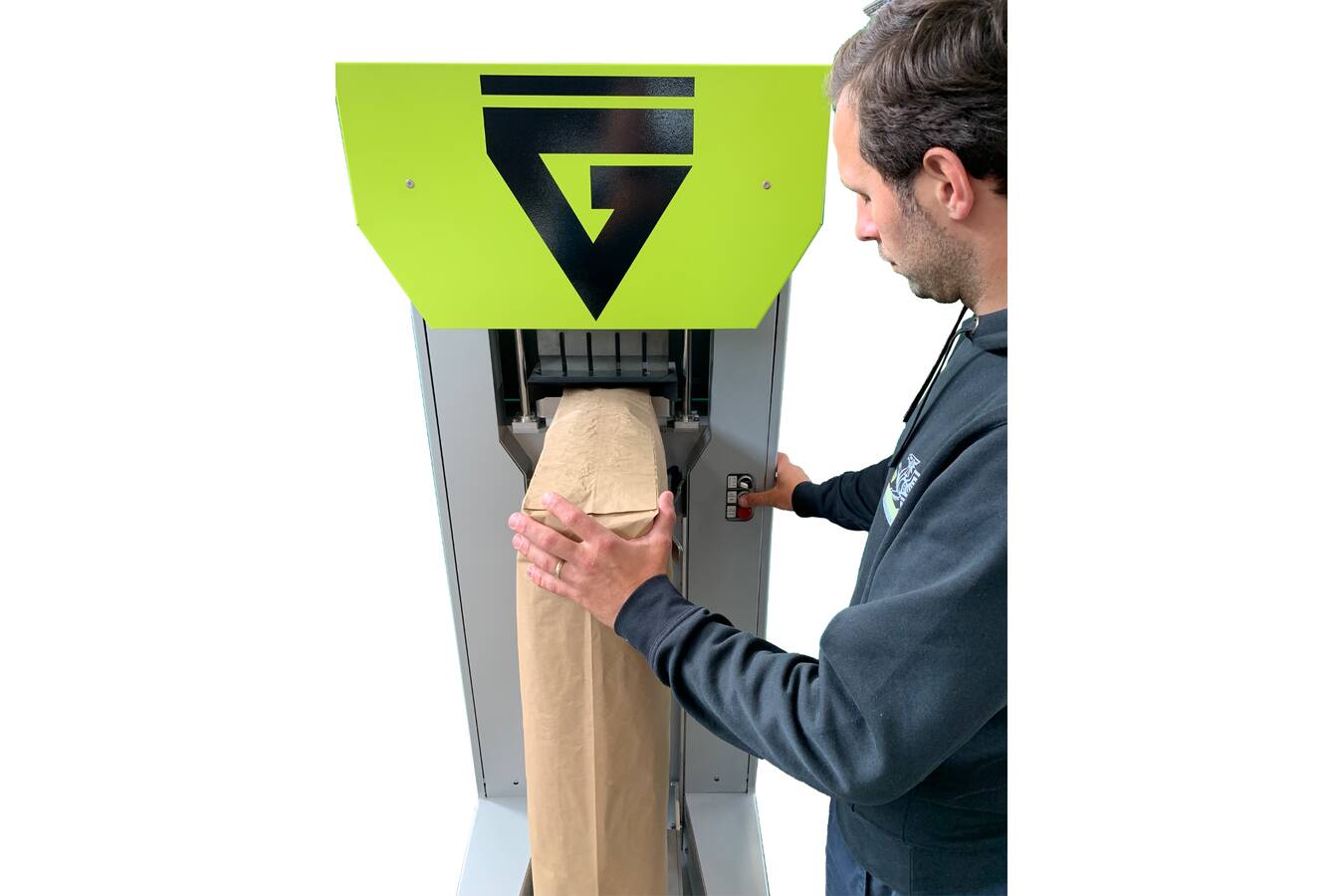
To address these challenges, fully automated full-line systems are increasingly used, integrating both upstream handling and the filling process. At the core of such systems is a dual-spout vacuum bagging machine for valve bags, where the air contained in the product is actively reduced during filling. At the same time, a controlled and consistent material feed from the pre-hopper ensures a stable product flow.
Example of an integrated system
A typical system configuration combines multiple process steps into one continuous line. Such a system can achieve a capacity of up to 80 bags per hour, depending on bag sizes, for example 6.5 kg and 12.5 kg. It consists of:
- vacuum bagging via two filling spouts
- flexible handling of different bag formats through an adapted bag gripper
- automated sealing of valve bags
- bag equalization for improved shape stability
- downstream palletizing
Measurable improvements
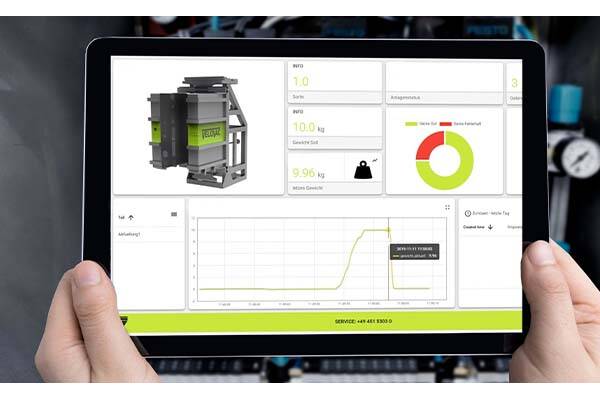
- more stable and reproducible filling processes
- consistent filling weights
- compact and shape-stable bags
- improved stacking and transport behavior
- more efficient use of storage and transport capacity
Conclusion
Fiber processing requires a coordinated interaction between material handling and filling technology. Integrated system concepts combined with vacuum technology enable significant improvements in both process stability and overall logistics efficiency.